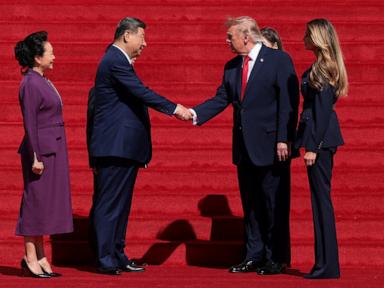
When Donald Trump welcomed Chinese President Xi Jinping to the White House, the pageantry was hard to miss. We saw troops marching in tri-corner hats and a Rose Garden dressed up for the cameras. Yet when reporters pressed the president for substance, the response felt remarkably thin. Trump shrugged off hard policy questions with a quip about granite and a wave of his hand.
If you are looking for clear geopolitical wins from this high-stakes meeting, you are going to be disappointed. Trump is keeping his cards close to his chest, leaving analysts guessing about what actually happened behind closed doors.
The Trade Truce Kick-the-Can Strategy
Let us talk about the economic side of things first. Treasury Secretary Scott Bessent announced that the two superpowers extended an expiring trade truce for just two months. That is it. A temporary fix that pushes the hardest decisions down the road.
Instead of locking in a durable bilateral agreement, both administrations chose to buy time. Tariffs, rare-earth supply chain restrictions, and tech controls remain hanging in the balance. You do not need an advanced degree in economics to see what is happening here. Both sides wanted a photo op without the political fallout of a contentious compromise.
Taiwan and the Rhetorical Tightrope
As expected, Xi brought up Taiwan. According to Beijing's official state media, Xi urged Washington to handle the Taiwan question with extreme prudence and to actively oppose Taiwanese independence. That language is a clear step beyond Washington's traditional formulation of merely not supporting independence.
The White House did not immediately issue a detailed readout of this specific exchange. Why? Because any shift in wording regarding Taiwan sends shockwaves through Congress and rattles regional alliances. Trump has previously treated multi-billion dollar arms packages for Taiwan as negotiating chips rather than fixed red lines. By staying silent on the specifics of this discussion, the administration avoids an immediate legislative brawl, but it leaves allies in the Indo-Pacific wondering where America truly stands.
The Artificial Intelligence Divide
Artificial intelligence was another major flashpoint on the agenda, featuring tech leaders like Sam Altman, Sundar Pichai, and Jensen Huang at the state dinner. Yet public statements from the two leaders revealed a stark philosophical split.
Trump wants to keep federal guardrails loose, arguing that domestic courts and the Department of Justice are enough to police the sector. He even insisted that Beijing shared his hands-off philosophy. Xi, on the other hand, publicly emphasized that both nations carry a heavy responsibility to keep artificial intelligence under strict human control and management. When the world's two largest technology titans disagree fundamentally on how to regulate the future of machine intelligence, a handshake photo does not bridge the gap.
Why the Silence Speaks Volumes
Trump has always preferred personal chemistry over bureaucratic process. Remember when he praised Xi's appreciation for good granite instead of detailing trade deficits or military communication channels? That is classic political theater.
When a leader refuses to share concrete takeaways from a summit with a primary geopolitical rival, it usually means one of two things. Either nothing substantial was agreed upon, or the concessions made were too politically risky to advertise ahead of domestic deadlines.
The reality is that great power competition doesn't get solved during a single state visit, no matter how elaborate the military parade looks from the Rose Garden. If you want to understand where US-China relations are heading, ignore the pageantry on the lawn. Watch what happens when those temporary trade extensions expire and supply chains face their next real test.
.jpg?itok=hg_o2L0E)