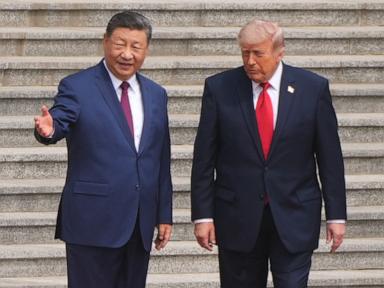
When Chinese President Xi Jinping touches down in Washington for his first U.S. state visit in over a decade, he isn't walking into the capital from a position of weakness. China isn't just another trading partner anymore. Over the past decade since his 2015 trip under the Obama administration, Xi has engineered an enormous shift in global power dynamics.
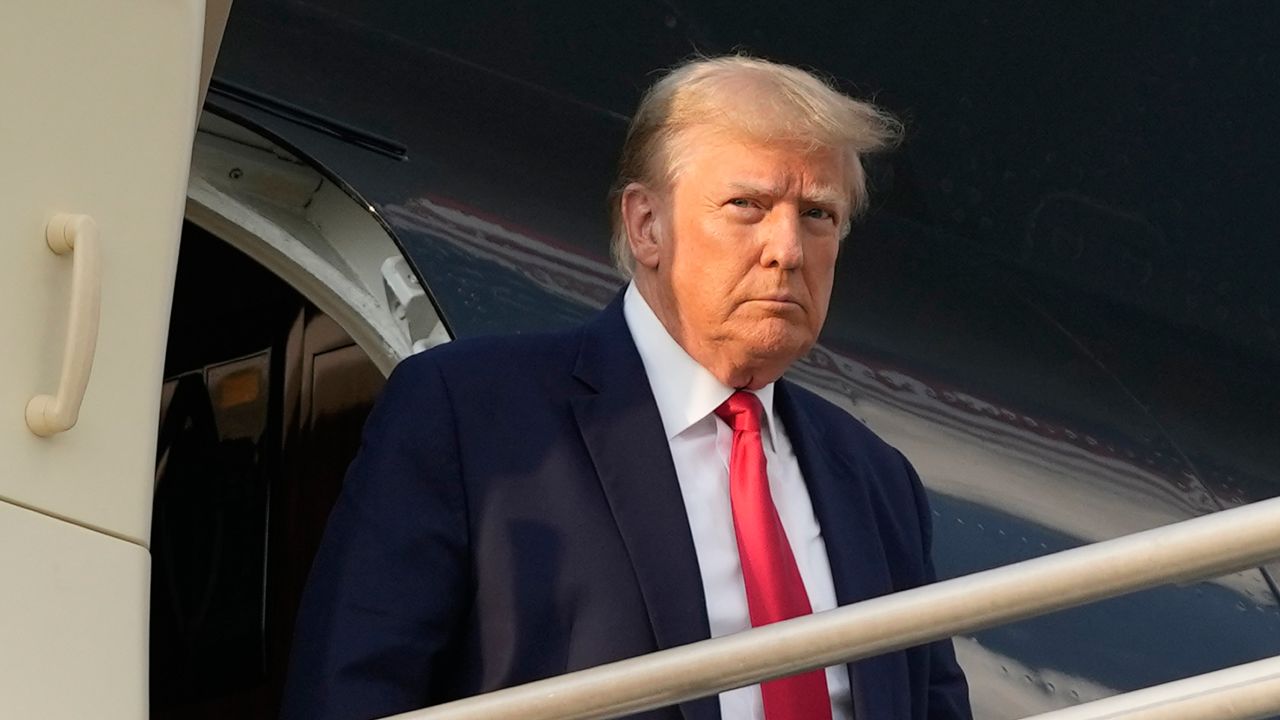
You're looking at a superpower that has quietly reduced its economic dependence on the United States while building the world's largest naval fleet and securing a near-monopoly on critical rare earth minerals. President Donald Trump might be rolling out a rare tarmac welcome at Joint Base Andrews, but make no mistake. Xi is arriving with immense leverage.
The Real Agenda Behind Closed Doors
Forget the red carpets and the black-tie state dinners with tech titans like Elon Musk and Jensen Huang. The substantive goals of this three-day summit boil down to a few high-stakes pressure points.
- Extending the Trade Truce: The number one priority for Beijing is keeping the trade ceasefire alive. The temporary agreement struck in Busan after last year's brutal tariff battle is set to expire on November 10. If it collapses, both nations face a return of steep tariffs and export restrictions.
- Artificial Intelligence Governance: Both superpowers know they need guardrails. Treasury and state officials have discussed setting up a formal AI dialogue mechanism, though Beijing wants to make sure Washington doesn't use safety as a backdoor to choke off Chinese technological progress.
- The Iran Conflict and Oil Prices: Surging oil prices driven by Middle Eastern disruptions are pinching China's economy. Washington wants Beijing to lean on Tehran, while Xi wants to ensure Chinese banks aren't slammed with fresh sanctions over energy imports.
- The Taiwan Flashpoint: Beijing continues to press hard against U.S. arms sales to Taiwan. Meanwhile, Taipei is watching every handshake and ceremony with intense anxiety, holding live-fire military drills just as the summit kicks off.
How the Power Dynamic Changed Since 2015
Back in 2015, the U.S. accounted for nearly one-fifth of China's $2.3 trillion in exports. Today, the U.S. remains a top market, but its share has dropped to roughly 11 percent of total Chinese exports, which topped $3.7 trillion recently.
China didn't buckle under American tariffs. Instead, Beijing diversified its shipping routes, fortified its domestic markets, and moved aggressively up the global manufacturing value chain. When China matched punishing tariffs last year and threatened to cut off critical mineral processing, Washington blinked.
As veteran diplomats point out, China isn't arriving on the global stage anymore. It has already arrived.
What Happens Next
Expect plenty of pomp, dramatic photo ops, and high-profile handshakes designed to soothe domestic audiences in both countries. Trump gets to showcase a powerful international summit right ahead of the midterm elections, while Xi secures the prestigious optics of being treated as an absolute equal in the heart of Washington.
The real test comes after the cameras stop rolling. Watch the expiration date on the trade truce in November. If the two leaders can't lock down a long-term economic arrangement, the fragile stability they are currently celebrating could unravel overnight.