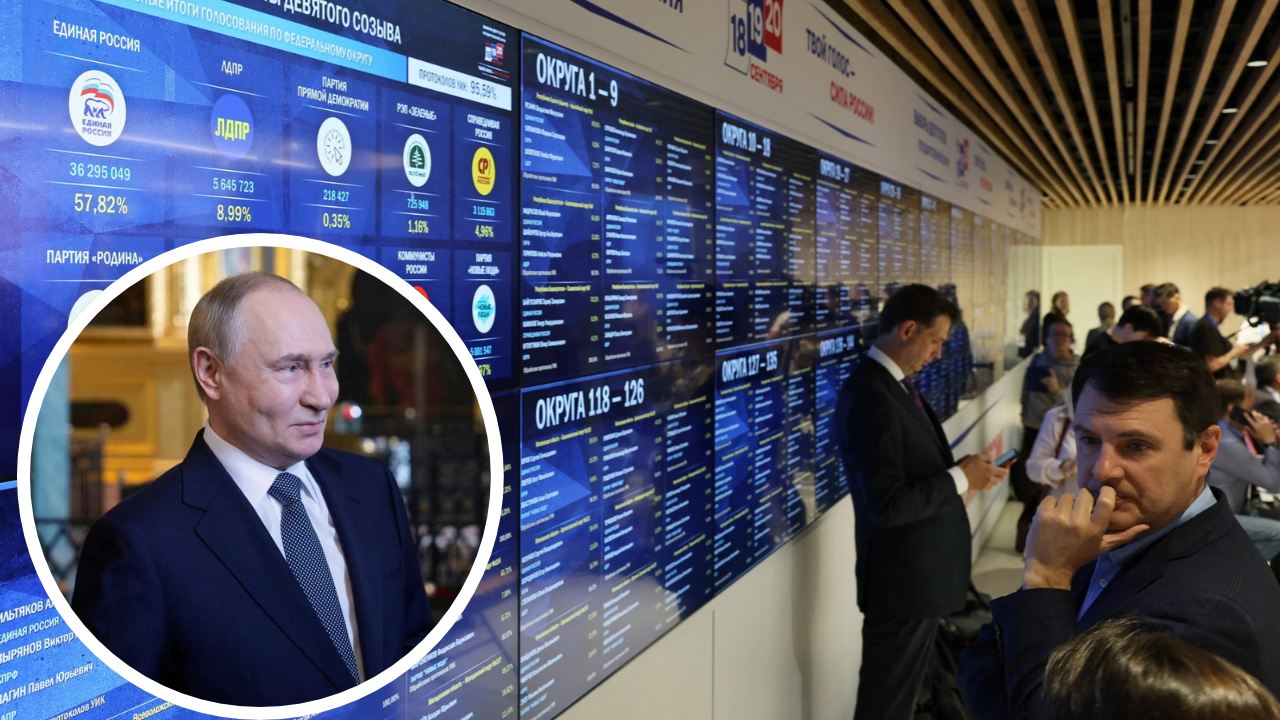
You already know who is going to win. If you followed the parliamentary contests in Russia, the outcome didn't keep anyone up at night. Vladimir Putin's ruling party, United Russia, secured a massive supermajority in the State Duma, sweeping up close to eighty percent of the seats. The real question isn't about who takes power. The real mystery is why the Kremlin bothers to spend time, money, and administrative energy organizing a massive national vote when the ending is written before the ballots are even printed.
If you assume authoritarian governments simply rule by decree and toss out the ballot box entirely, you're missing how modern autocratic systems actually survive. Autocrats love elections. They need them.
The Mechanics of Control and Measurement
Think of a national vote not as a democratic contest, but as an expensive diagnostic tool. When you run a massive country with thousands of regional bureaucrats, you face a massive information problem. Local officials love to tell Moscow what the central government wants to hear. Reports get sugarcoated. Compliance numbers get inflated.
An election forces a physical test of the state machinery. Regional governors have to prove they can mobilize voters, get people to the polling stations, and deliver the required numbers. If a specific region suddenly shows terrible turnout or weak support for United Russia, red flags pop up in Moscow. Political scientists call this the "fire alarm" function. It tells the Kremlin which local bosses are slacking off and where administrative control is fraying.
Beyond checking up on local governors, the exercise provides a concrete metric of public submission. When millions of people cast ballots—aided by three-day voting windows and electronic systems—the government claims a powerful narrative of public backing. It doesn't matter that real opposition figures were blocked, that the single registered anti-war party was banned by the Supreme Court, or that independent observers reported restrictions. The optics of participation matter more than the presence of genuine choice.
Manufacturing Domestic Legitimacy
Internal stability requires more than brute force. If a leader rules purely through open terror, the system becomes fragile. People comply out of fear, but they also look for cracks.
Elections provide a veneer of institutional continuity. They allow the ruling regime to wrap itself in the flag of constitutional normality. When state television broadcasts footage of citizens filing into polling places, it sends a psychological signal. It tells the average citizen that everyone else is playing along, so you might as well fall in line too. Resistance feels lonely and pointless when an entire national ritual is staged to look like a collective mandate.
This function became critical during wartime. With the conflict dragging on and economic pressures mounting, the Kremlin used the ballot boxes as a high-stakes barometer for societal cohesion. State media framed the process not as a routine legislative race, but as a direct referendum on the military campaign. By claiming a high turnout and an overwhelming victory, the leadership attempts to convince both domestic and international audiences that the population remains fully consolidated behind the current path.
Managing the Elite and the Systemic Opposition
You might wonder why smaller parties like the Communists or the nationalist factions are allowed to exist in parliament if they always vote with the ruling party anyway. They serve a vital safety valve function.
These groups form the so-called systemic opposition. They capture protest votes from citizens who are genuinely frustrated with economic conditions, inflation, or falling living standards, but they never truly threaten the core architecture of power. By keeping these tame opposition parties inside the legislature, the system absorbs dissent. It gives dissatisfied voters a safe channel to vent their anger without taking to the streets.
At the same time, the process helps manage ambitions within the ruling elite itself. Distributing parliamentary seats, committee chairmanships, and regional positions keeps different factions of the political class happy. It creates a closed marketplace of rewards and loyalties. Everyone knows their place, and everyone gets a cut of the pie as long as they stay inside the boundaries set by the leadership.
The Cost of Abandoning the Ritual
If the Kremlin dropped elections tomorrow, what would change? Paradoxically, it would create new vulnerabilities. Once you discard the ritual of popular mandate, you drop the mask of constitutional governance. You become an overt military dictatorship overnight. That shift changes the psychological contract between the ruler and the ruled, stripping away the comforting illusion that ordinary people have a role to play, however managed it might be.
Elections persist because they are intensely useful to the people running the show. They test the bureaucracy, manufacture domestic legitimacy, absorb harmless dissent, and provide a convenient data set for an autocracy trying to keep its grip on a massive society. The votes might be predetermined, but the utility of the theater is entirely real.