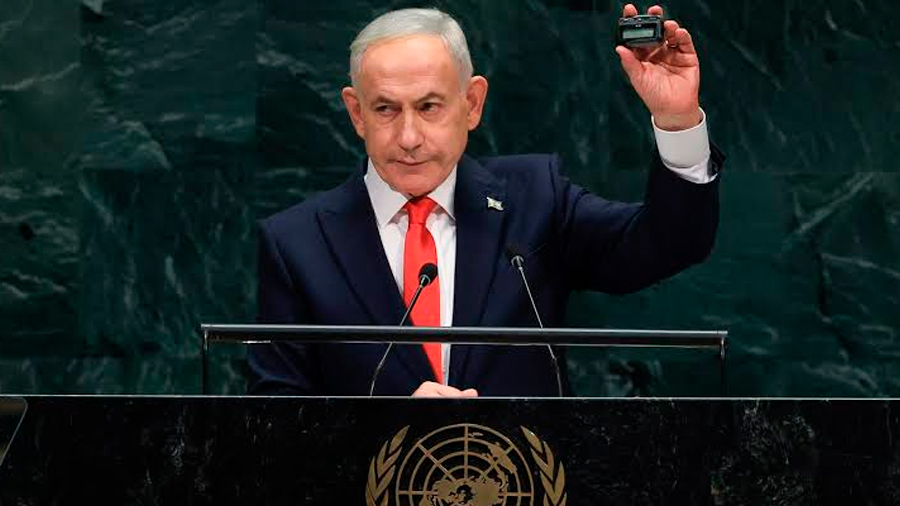
Syrian President Ahmed al-Sharaa didn't mince words at the United Nations General Assembly. Standing before world leaders in New York, he dropped a blunt reminder that the Golan Heights belongs to Syria and will stay that way.
If you've been following Middle Eastern geopolitics, you know this territory has been a massive flashpoint for decades. Israel seized the strategic plateau during the 1967 Six-Day War and formally annexed it in 1981—a move the international community never recognized. But tensions spiked recently when Colombia became only the second nation, following the United States, to recognize Israeli sovereignty over the territory.
Al-Sharaa pushed back hard against those shifting diplomatic tides.
Pushing Back Against International Recognition
"Any attempts that violate our sovereignty, violate international law, will be stopped," al-Sharaa told the assembly. He pointed directly to UN Security Council Resolution 497, which declares Israel's annexation null and void.
To drive his point home, al-Sharaa even recounted a sharp exchange he had with Donald Trump regarding territory. When told that Washington viewed the Golan as Israeli, al-Sharaa quipped back: "Why don't you give New Jersey to the Israelis? You don't own the Golan Heights to give, but you own New Jersey."
It's a stark way to frame the debate, but it highlights the core issue. Damascus insists that external actors cannot simply trade away sovereign land. Back in December 2025, 123 countries backed a UN General Assembly resolution supporting Syria's claim. While major powers remain divided, Syria's leadership is drawing a hard line in the sand.
The Ground Reality Inside Post-Assad Syria
Diplomatic speeches at the UN are one thing. The reality on the ground is far more volatile.
Since the fall of Bashar al-Assad, Syria's new government has had to manage an aggressive military posture from its southern neighbor. Al-Sharaa didn't hold back on the numbers during his UN address, accusing Israel of launching nearly 500 air and artillery strikes, conducting over 1,200 incursions, and executing around 300 detentions inside Syrian territory.
For Damascus, these numbers represent an unacceptable security threat that risks dragging the region backward. The government maintains that it wants to stick to the 1974 Disengagement Agreement, demanding that Israeli forces pull back to previous lines.
Yet, diplomacy hasn't completely stalled. Reports from diplomatic circles indicate that back-channel security talks have made surprising headway, with negotiators reportedly hashing out nearly 90 percent of a potential framework.
What Happens Next for the Golan Heights
You might wonder if Syria has any realistic path to recovering the plateau through military force. The honest answer is no. Syria's military is in no position to fight a conventional war over the territory right now, and the new administration is prioritizing internal stabilization and the return of millions of displaced citizens.
Instead, Syria's strategy relies heavily on international law, diplomatic pressure, and public posturing at global forums like the UN. By keeping the legal invalidity of the annexation in the spotlight, Damascus hopes to prevent normalization trends from cementing permanent control in Israel's favor.
The Golan Heights remains a legal and strategic stalemate. As long as international bodies back Syria's territorial integrity on paper, Damascus will continue fighting the battle with words, pressure, and stubborn persistence.