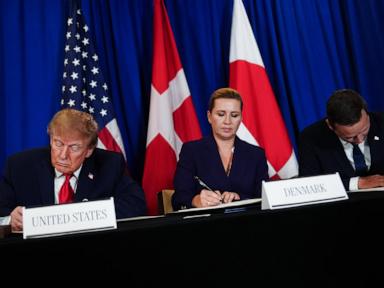
Donald Trump just signed a security pact with the leaders of Denmark and Greenland on the sidelines of the UN General Assembly in New York, effectively ending months of high-stakes friction over the world’s largest island. If you've been following the breathless headlines about Washington buying or seizing the icy territory, you'll want to look past the political theatre. Sovereignty remains with Copenhagen and Nuuk, but the United States just secured expansive military access and veto power over foreign rivals in the Arctic.
The agreement grants Washington sweeping control over defense matters on the island, creating a permanent barrier against Chinese and Russian military footprints. For months, Trump insisted the US needed a tight grip on Greenland for national security reasons, even refusing to rule out military force early on. That rhetoric caused real panic across NATO capitals. Now, the dust has settled into an actual text. Here is how this new pact reshapes global power dynamics in the far north.
What the Agreement Actually Says About Security and Bases
The new framework goes far beyond the existing 1951 defense agreement that gave the US rights to the Pituffik Space Base in northwestern Greenland. According to reports from the accord's rollout, the US military will expand its footprint significantly. Plans are already moving to reopen a former Cold War-era base at Narsarsuaq in southern Greenland and set up a new presence at Mestersvig on the east coast.
Let's look at the hard restrictions built into the deal:
- No non-NATO country can build manned or unmanned military installations on Greenlandic territory.
- No adversary nation can establish a persistent military presence or make sensitive strategic investments without express US and allied approval.
- The pact features no expiration date, which Trump famously branded an "Infinite Life" agreement.
If Greenland ever chooses to break away and become an independent nation, the terms dictate that it must remain inside NATO and absorb all of Denmark's existing rights and obligations under this new security framework.
Why Greenland Matters Right Now
You might wonder why Washington cares so much about a sparsely populated island of roughly 57,000 people. The answer comes down to geography, climate change, and raw materials. As polar ice recedes, new shipping lanes open up across the Arctic Ocean, cutting transit times between Asia, North America, and Europe. Both Russia and China have spent years investing heavily in northern infrastructure and icebreakers.
Washington views the Arctic as the next major strategic frontier. Beyond military positioning, Greenland boasts massive deposits of rare earth elements—minerals vital for everything from electric vehicles to defense electronics. For years, Western nations watched anxiously as foreign firms tried to secure mining rights. This new accord slams the door on those maneuvers by locking down security and sensitive economic sectors under a strict Western umbrella.
How Denmark and Greenland Salvaged Their Red Lines
When Trump first revived his push to acquire Greenland after returning to the White House, European leaders balked. Danish Prime Minister Mette Frederiksen stood firm, and Greenland's Prime Minister Jens-Frederik Nielsen insisted the island was not for sale.
Yet, diplomacy managed to thread the needle. Danish and Greenlandic officials successfully protected their ultimate red line: no transfer of sovereignty. The island remains an autonomous territory within the Kingdom of Denmark. Greenlandic leaders framed the deal as a way to strengthen local security while preserving the right to self-determination. By leaning into the broader NATO architecture, Copenhagen managed to appease Washington's defense demands without surrendering a square inch of official territory.
If you are tracking geopolitical shifts in the North Atlantic, stop waiting for an actual land purchase. That narrative was always a distraction from the real objective. Washington wanted a permanent strategic shield in the Arctic, and it just got it in writing. Keep an eye on the upcoming infrastructure buildout at Narsarsuaq and Mestersvig as the US military turns this diplomatic ink into concrete reality.