Whenever Washington and Beijing sit down for high-stakes talks, New Delhi holds its collective breath. Every handshake between American and Chinese leaders sends immediate shockwaves across South Asia. You'll often hear foreign policy pundits panic about a potential "G2" arrangement where the two superpowers carve up global spheres of influence and leave India out in the cold.
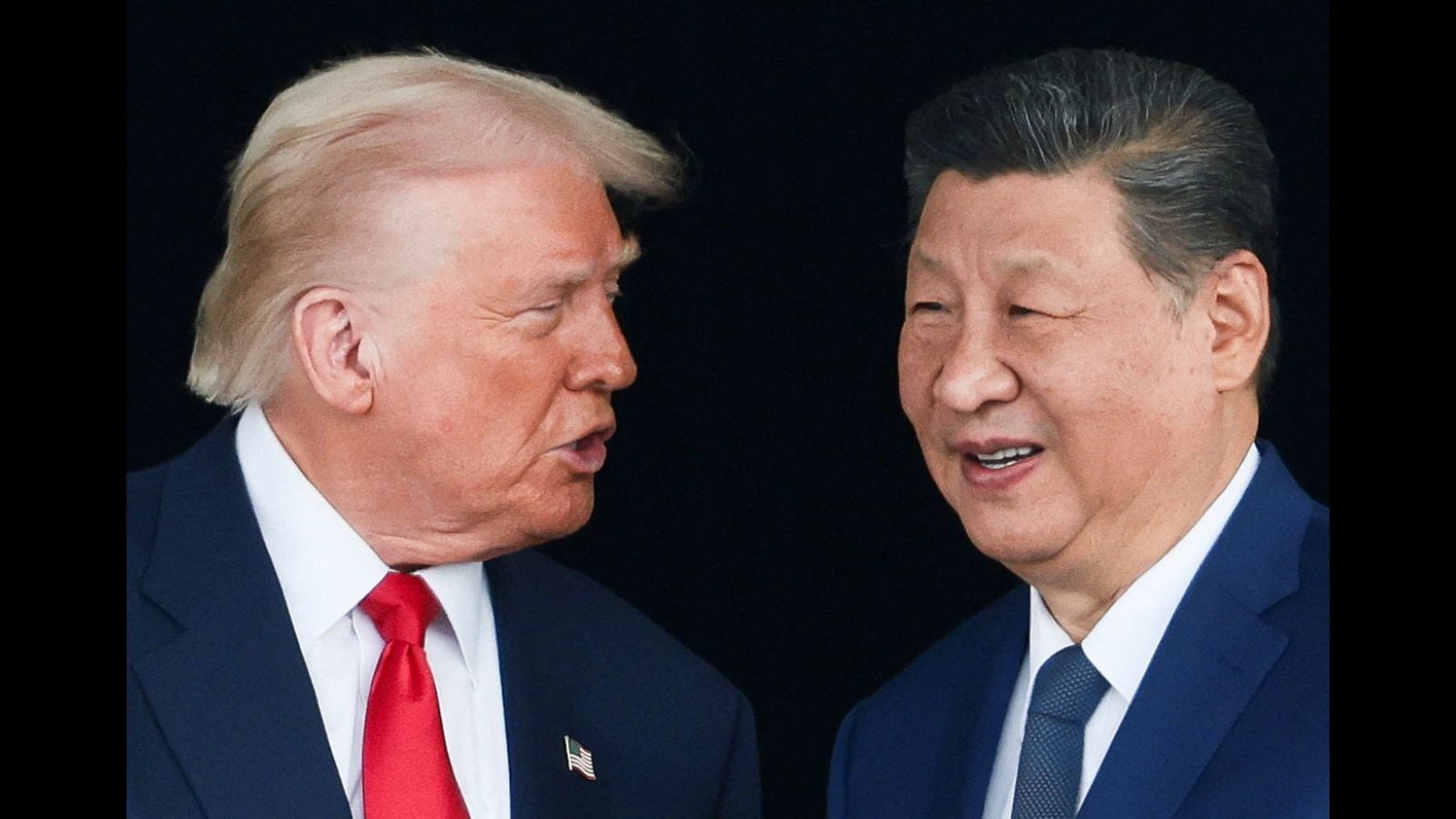
Let's look past the dramatic headlines. The reality on the ground is far more nuanced than what standard news broadcasts suggest. When Donald Trump and Xi Jinping meet to negotiate trade boundaries, semiconductor curbs, and West Asian friction points, India isn't just a nervous spectator. New Delhi is actively calculating how to turn superpower competition into concrete economic and strategic gains.
The Fear of a Superpower Condominium
For decades, Indian strategists have worried about a bipolar accommodation. If the world's two largest economies decide to bury the hatchet and divvy up international markets, mid-sized powers like India risk losing critical diplomatic leverage.
Think about what happens when trade truces get signed. If Washington dials back tariffs on Chinese goods or strikes a grand bargain on artificial intelligence and rare earth minerals, American capital might flow right back into mainland factories instead of looking toward alternative hubs like Tamil Nadu or Gujarat. That's the nightmare scenario for Indian manufacturing ambitions.
Yet, history tells us that a permanent grand bargain between the US and China is basically a pipe dream. Structural friction runs too deep.
Why This Summit Worked Out Fine for New Delhi
Contrary to doomsday predictions, recent high-level summits between Trump and Xi haven't resulted in a superpower alliance against Indian interests. In fact, they've often played out rather well for South Asia's biggest democracy for a few specific reasons.
First, the meetings tend to freeze dangerous escalations without fixing the underlying trust deficit. When Washington and Beijing agree to temporary ceasefires on tariffs or tech restrictions, it lowers the immediate risk of a catastrophic military showdown in the Indo-Pacific. India needs regional stability to keep its domestic growth engine humming. An accidental naval clash in the South China Sea helps nobody.
Second, the structural rivalry never actually goes away. Even when leaders shake hands for the cameras, American export controls on advanced AI chips and semiconductors remain firmly in place. Major US firms keep hitting roadblocks trying to expand operations inside mainland China.
This ongoing tech cold war benefits Indian industrial policy directly. Global corporations want supply chain resilience. They don't want all their eggs in one geopolitical basket. India offers a massive domestic market and a viable alternative manufacturing base precisely because US-China decoupling isn't reversing anytime soon.
The West Asia Factor and Regional Security
You can't talk about a Trump-Xi summit without looking at flashpoints beyond East Asia, particularly West Asia and energy supply lines. As crude oil volatility rattles global markets and regional conflicts threaten maritime trade routes, both superpowers have skin in the game.
China relies heavily on West Asian oil imports, making Beijing deeply sensitive to supply disruptions. Meanwhile, Washington continues to police energy corridors and manage complex diplomatic standoffs involving Iran and regional allies.
When Trump confronts Xi over energy security or geopolitical alignments, it keeps Beijing preoccupied with its own backyard challenges. For New Delhi, this means China has fewer diplomatic resources to spare for aggressive posturing along the Line of Actual Control. India gets breathing room to fortify its own defense posture and build deeper minilateral partnerships like the Quad without facing a unified, unchecked Beijing.
The Real Challenge Lies Closer to Home
Instead of worrying about what Washington and Beijing might negotiate behind closed doors, India's real focus needs to be on execution at home.
If Beijing feels confident that it has stabilized its relationship with the US, an emboldened China might adopt an even harder line in bilateral friction with its neighbors. A self-assured superpower doesn't soften its border stance just because it signed a temporary trade truce in a third country.
India's best defense isn't hoping that the US and China stay permanently at war. It's building domestic economic muscle. That means speeding up infrastructure projects, cutting through bureaucratic red tape, and making local manufacturing so competitive that global capital chooses India on pure economic merit rather than geopolitical default.
Stop waiting for superpowers to solve your strategic dilemmas. The smart play is to grow so fast that nobody can afford to ignore you.