Governments usually wait for a disaster before they build safety rails. Right now, Washington and Beijing are trying a different playbook.
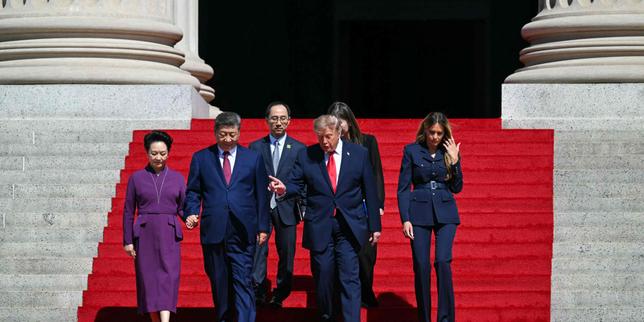
During a high-profile summit in Washington, U.S. President Donald Trump and Chinese President Xi Jinping agreed to create a direct communication channel specifically for artificial intelligence incidents. Or, as their official fact sheets call it, Super Intelligence (SI). For a closer look into similar topics, we recommend: this related article.
If you think this sounds like a Cold War hotline for algorithms, you're not far off.
Both superpowers recognize a terrifying reality. Advanced machine learning models are growing faster than anyone's ability to monitor them. When autonomous systems start making critical miscalculations in defense or financial grids, waiting for standard diplomatic channels could trigger an accidental escalation. To get more background on the matter, detailed reporting can also be found on TechCrunch.
So, what does this new framework actually mean? Why are they shifting terminology to "Super Intelligence"? And can two bitter rivals really trust each other when code decides the outcome?
The Shift to Super Intelligence
Let's address the terminology change first. Moving from artificial intelligence to Super Intelligence isn't just bureaucratic rebranding. It signals a shared anxiety about systems that surpass human cognitive limits.
Standard machine learning tools can write essays or generate deepfakes. Super Intelligence implies autonomous agents capable of self-improvement, strategy formulation, and large-scale disruption. When U.S. and Chinese delegations met at the White House, they established the U.S.-China Super Intelligence Dialogue to map out these risks.
The next formal exchange is locked in for November. That leaves very little time to turn diplomatic handshakes into functioning protocols.
Xi Jinping took a notably measured stance during the summit. He publicly emphasized that both countries share the responsibility to keep advanced algorithms under strict human control. Meanwhile, Donald Trump adopted a more casual approach on social media, noting that they discussed SI heavily while preferring to keep the current framework straightforward.
Behind the public posturing, intelligence agencies in both countries are sweating.
Why a Communication Channel is Hard to Build
Setting up a red phone for nuclear threats is relatively easy. You have clear parameters, known launch codes, and decades of strategic doctrine.
Algorithms don't work that way.
An AI incident isn't a missile launch. It looks like a flash crash in global markets caused by autonomous trading bots, or a compromised utility grid driven by predictive software gone rogue. Pinpointing who or what caused the failure takes days. By then, panic has already set in.
If an incident occurs, who picks up the phone? A traditional diplomat won't understand neural network weights or prompt injection vulnerabilities.
- Technical translation is messy.
- Attribution is nearly impossible in real-time.
- State secrecy often prevents transparent post-mortems.
Without a shared technical vocabulary, a hotline risks becoming an expensive voicemail service.
What the Public Gets Wrong About US-China Tech Relations
Most headlines frame this relationship as a pure zero-sum tech war. Every microchip restriction or data ban gets treated like an incoming missile strike.
The reality on the ground is messier.
While Washington and Beijing slug it out over semiconductor supply chains and export controls, they also realize that uncontrolled autonomous systems threaten both of their economies equally. A rogue algorithm doesn't check passports before crashing a power grid.
That's why pragmatic risk management occasionally punches through nationalist rhetoric. Corporate leaders from major tech firms attended White House banquets during the summit, underlining how tightly intertwined corporate incentives remain despite geopolitical friction.
Practical Steps for Tech Leaders and Observers
If you're building software, investing in tech markets, or simply trying to make sense of geopolitical risk, don't ignore these bilateral talks.
Keep track of the November dialogue outcomes. Watch for regulatory frameworks that trickle down from these superpower summits into corporate compliance requirements. If the U.S. and China agree on baseline safety protocols for advanced models, enterprise software companies worldwide will have to adopt them.
Monitor your own exposure to autonomous agent automation. As governments clamp down on systemic risks, liability laws for autonomous software failures will tighten dramatically.
Prepare for a world where code is treated with the same diplomatic gravity as hardware.